
Well, it's been a long time since my last 'view' back in August 2020. That's almost back to the days when Team Sky/Ineos governed the grand tours, when Quick-Step still ruled the Classics and when women's racing had yet to make its quantum leap to the equality it now shares with the men. The last time I wrote a blog, Philippe Gilbert was still the reigning 'champion' of the Tour of Flanders because the 2020 edition took place in October due to the Covid-19 pandemic. That same pandemic saw a whole raft of events delayed and re-scheduled, with Paris-Roubaix actually cancelled - an almost forgotten item four years on. Primoz Roglic looked to have won a delayed Tour de France in September, only to be shocked on the penultimate stage by a young pup called Tadej Pogacar. The Tour's importance had pushed the Giro and Vuelta into autumn with Tao Geoghegan Hart winning a Giro that overlapped the start of a Vuelta won by Roglic. Both Flanders, won by Mathieu van der Poel, and Liege-Bastogne-LIege - won by Roglic - had taken place during the Giro. But it was Pogacar's ambush on Roglic in the Tour that became the talking point of the 2020 season, which is what leads me into this revived 'Graham's View' at the end of the 2024 season. Yes, it's been a long time between drinks. I have watched, read, listened, and therefore dwelt so much on Pogacar this past nine months, he really has impressed and entertained us so much. But with such prowess came the over-use of the cringe-worthy acronym of G.O.A.T to dilute my appreciation of the Slovenian superstar. Pogacar is brilliant, he is incredible, he is exciting, he is spectacular, and - in 2024 at least - he was clearly un-beatable in almost ever race he started. But, excuse me, he is not the greatest cyclist of all time. He may never be. The original and present-day G.O.A.T is of course, Eddy Merckx, against whom all comparisons should be considered before bestowing the title to a relative newcomer. The facts are very clear: Merckx won five Tours de France, five Giri d'Italia, one Vuelta a España, x 7 Milan-Sanremo, x5 Liege-Bastogne-Liege, x3 World Championships, x3 Paris-Roubaix, x3 Fleche Wallonne, x 3 Ghent-Wevelgem, x2 Tour of Flanders, x2 Il Lombardia, x4 Paris-Nice. And, for seven consecutive years between 1969 and 1975, Merckx won a highly-respected Super Prestige Pernod competition that used to decide the best cyclist each season.
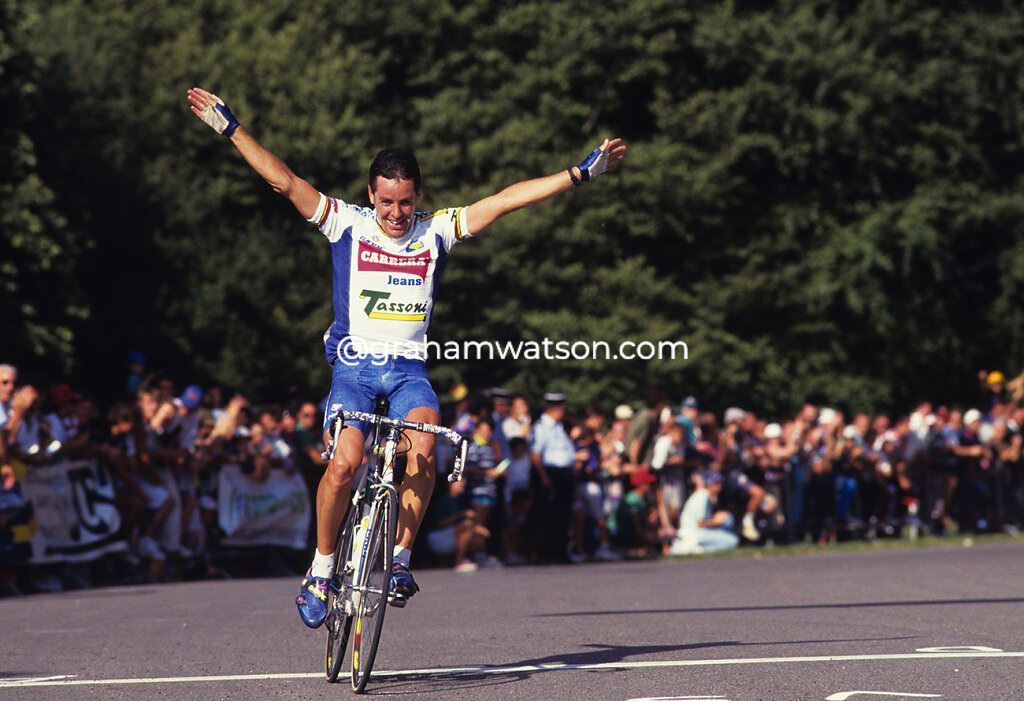
Disclaimer: this tale is not about the forthcoming Tour de France nor the battle to save the 2020 cycling season. It’s a fun look back at a tiny summertime race few people today have ever heard of, but which had a great winner in Stephen Roche. Definitely one from the vaults ! One race that won’t feature on this recently re-started, Covid-19 affected season, is the Criterium de Chateau-Chinon, not least because the race stopped permanently in 2000. In the aftermath of the 1998 Festina affair that almost brought the Tour de France to its knees, post-Tour exhibition races like that at Chateau-Chinon were suddenly shorn of spectator interest as the general public turned their backs, and entrance-fee money, on such races - at least in France they did. Yet the 1993 edition of the Criterium, held as per tradition on the first Monday of August in the dead-centre of France, provided me with one of my funniest experiences as a cycling photographer, in what was possibly the most insignificant event I’d ever been to. The idea, put forward by the founding editor of Cycle Sport, William Fotheringham, was to follow Stephen Roche on his journey that day, to record what only we knew was going to be ‘yer man’s last race as a professional cyclist. Believe me, it takes a lot to drag yourself back to France barely a week after the Tour has ended, when you’ve only just fled Paris for some blissful downtime at home. But the whiff of adventure was impossible to ignore, just as it had been so many times before. Six years earlier Irishman Roche had sensationally won the Tour de France, beating Pedro Delgado and Jean-Francois Bernard after a titanic battle over a marathon-like 25 stages. That Tour win in 1987 was part of a ‘triple crown’ that also saw Roche win the Giro d’Italia and World Championship in the same season. I’d had the pleasure of photographing Roche since he turned ‘pro in 1981 and felt especially proud of his Giro, Tour and Worlds victories.
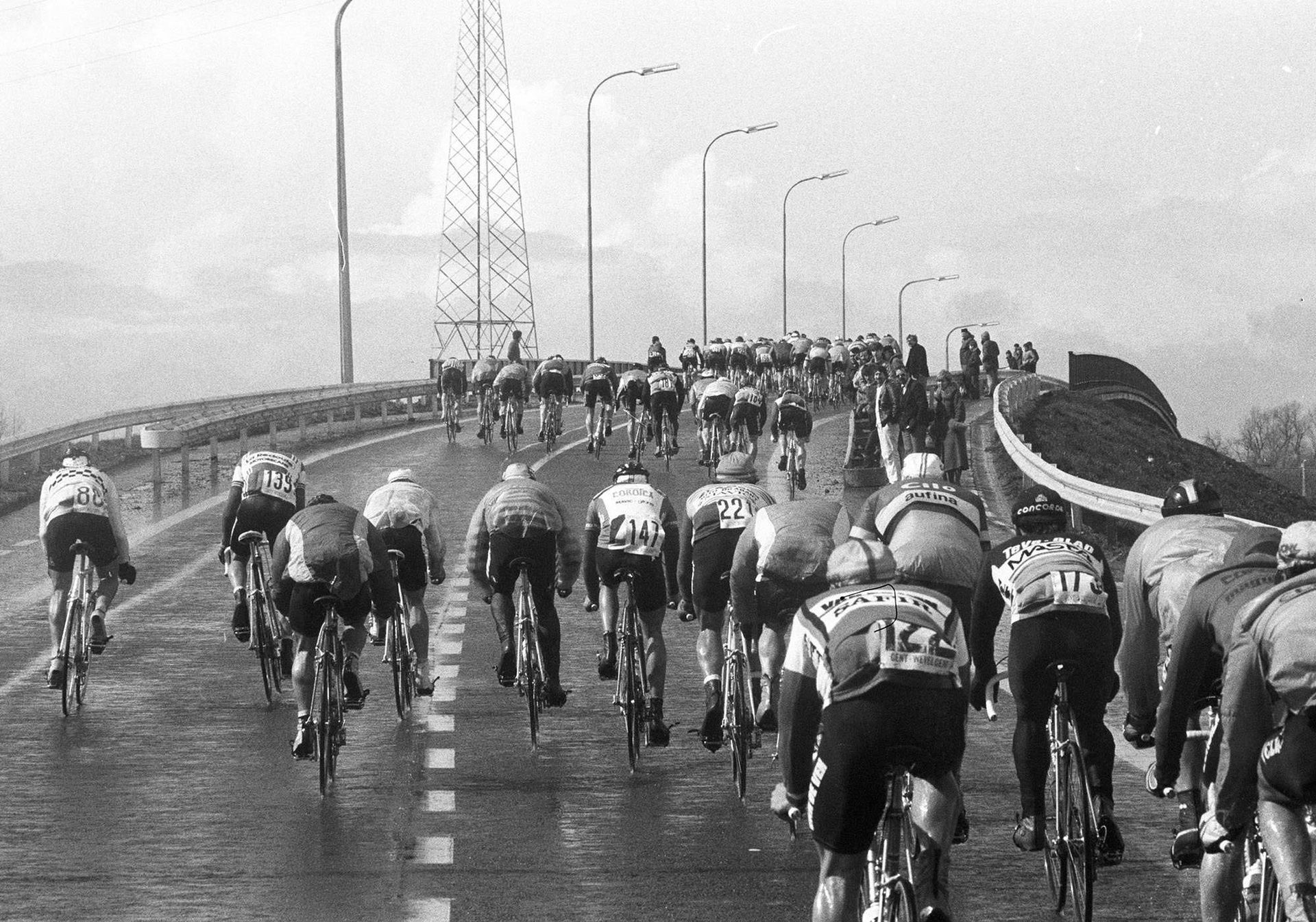
By now, in any normal season, we’d be indulging ourselves in the enjoyment of the Spring Classics, with all the excitement and anticipation that entails. In any normal season we’d already be celebrating the success of Milan San Remo and seeing if its winner could also manage to pull off a victory in one of the cobbled monuments like the Tour of Flanders or even Paris-Roubaix. Depending whether a pure sprinter or a power-climber had won Il Primavera, we’d be reviewing and discussing his chances in races like Dwars door Vlaanderen, E3, and Ghent-Wevelgem, and even stretching our imaginations to the hillier Classics of Limburg and Wallonia, to speculate further on the outcome of those treasured races. Except this is no normal season, how could it possibly be, in a year that is already beyond extraordinary because of the way the pandemic of Covid-19 has spread its evil across the world? Anyone who has followed cycling for a long time knows instinctively when a big race is happening, no matter where in the world you happen to be. It’s something you feel in your bones and in your veins, as much a physical sense as it is a mental one. But it’s the mental sense that strikes the harshest tone when those races have not taken place – there’s something missing from your life. This is one such year. Ghent-Wevelgem takes place on the last Sunday in March, each year, except that it didn’t. The Tour of Flanders has been held on the first Sunday in April since time began, but it too was postponed or cancelled. And Paris-Roubaix has followed suit – postponed from its slot on the second Sunday of April with no replacement date given. These three Classics happen to be equal favourites of mine and I’ve missed them as much as anyone else. So, time to pen a few thoughts and concoct a tribute because of their absence, so far, in 2020.
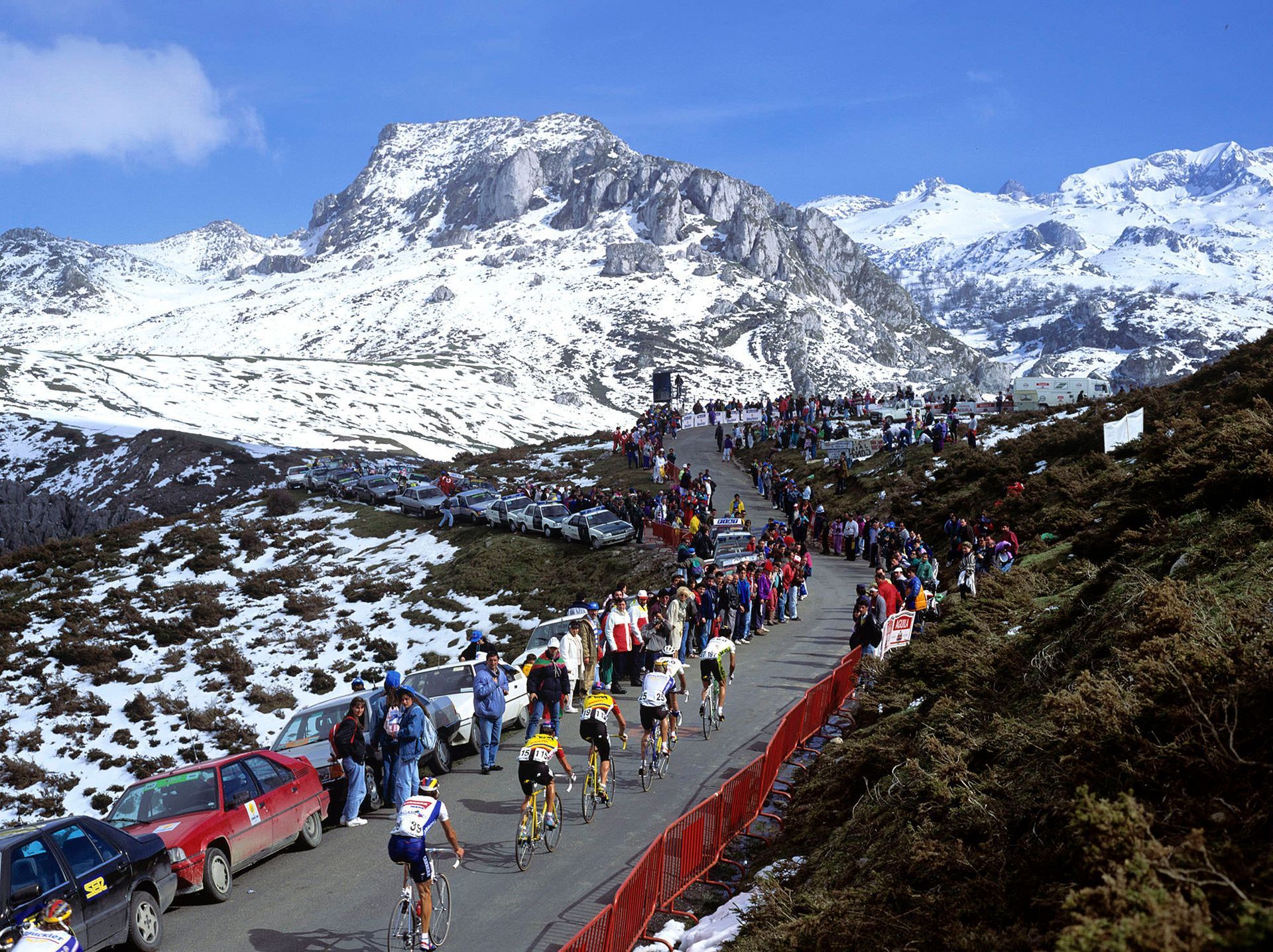
It only took a few minutes’ TV watching of stage one to pique my nostalgic instincts and remind me how much I adore the Vuelta a España. It was the evening sunlight that did it, reflecting brightly off the lapping waves of the Mediterranean sea to create soulful shadows from eight bicycles and eight cyclists as each team pointed themselves down the start ramp in Torreviega and sped off to a roar of approval from a rapturous crowd. Just as those roars grew louder in the most populated areas of the town, so did the shadows grow longer and darker as the sun came closer to setting, as the faster teams began their own race, and as the snow-white pyramids of sea-salt added a further, unique, quality to the evening’s entertainment. And then came the spectacular crashes of UAE and Jumbo-Visma - perfectly timed in the second half of the stage just as excitement of the finale was building on TV. This jolt from beauty to cruelty may have shocked many, but not-so those of us who expect such things to happen in the Vuelta. Because these things always happen in the Vuelta. The chances of witnessing chaos and mishap linger permanently over a race that’s not as tame nor as the sleepy as one expects for the time of the year. You don’t have to be a photographer, nor even a romantic traveller, to appreciate the summer ebbing away in Spain. What is required is a season-long work connection to cycling, one that’s seen you on the road since the cold months of February and March at a time when the Giro, Tour and Vuelta await many months down the road. I always loved the way the Vuelta acted as a way of seeing out the summer months and to ease our hearts and souls into autumn and the season’s end. It’s manic high pace, yet occasional lethargy, seemed just perfect for the period. The Vuelta celebrates the last week of summer when the beaches are still packed, the heat quite intense, and the hinterland of the country almost devoid of humanity when the Vuelta pedals by. The nights of that last week are crazy, noisy, raucous occasions, before the return to school that swallows up the nation’s youth as well as farewelling a million tourists too - that’s a Vuelta still in summer. Then we go north, celebrating a Spain much greener, cooler, quieter, a Spain that is ridding itself of those pesky tourists, tempting the locals to come out and cheer the race on themselves. To be near the ocean, particularly in the north-west of the country, to see the weakening sun set over the Atlantic, to experience dusk falling - that’s a Spain that is embracing the onset of autumn, with a powerful melancholy impossible to describe.
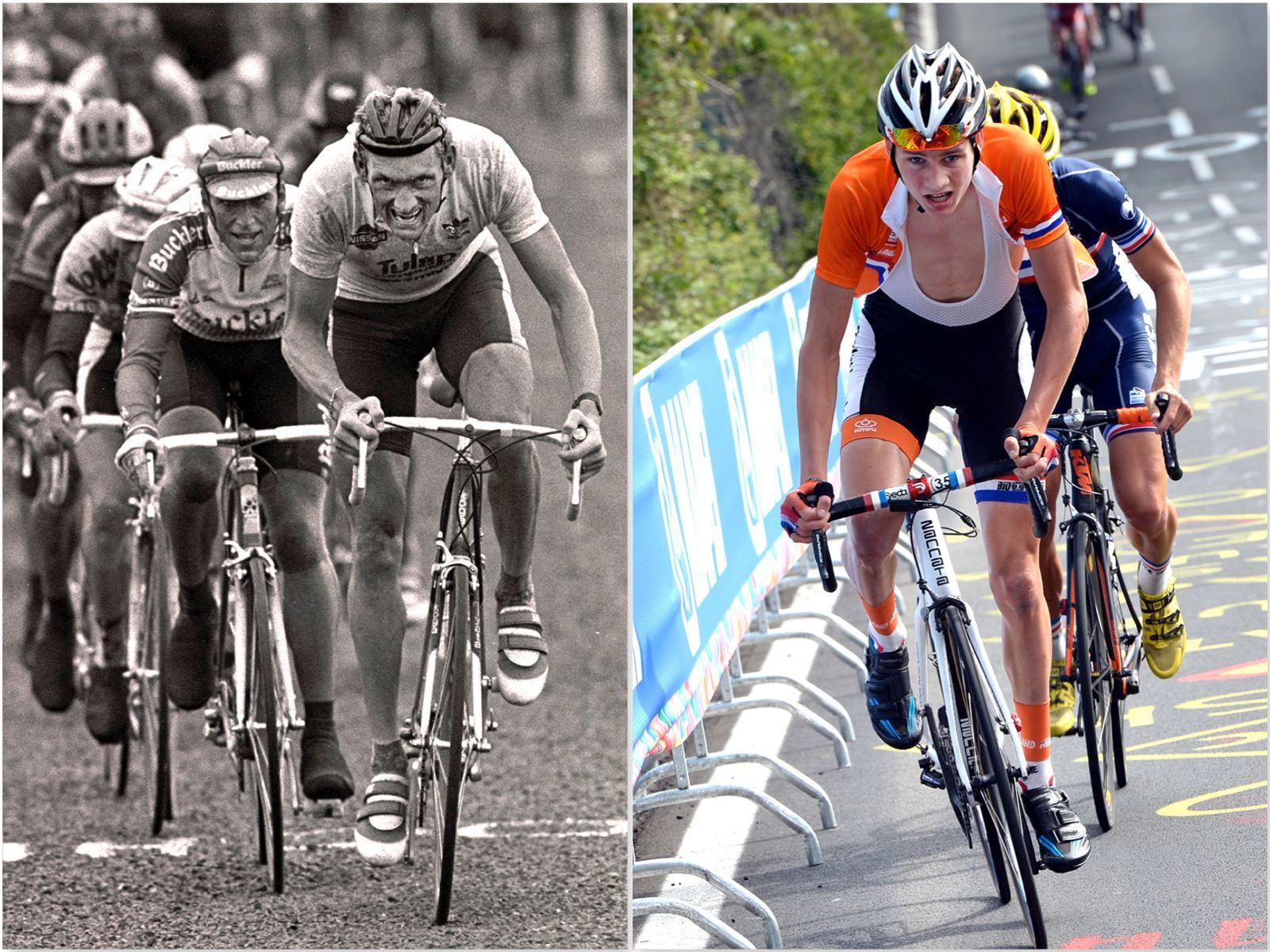
I didn’t really need to wait for the hilly Ardennes races to finish in order to say that Mathieu Van der Poel’s victory in the Amstel Gold was the most exciting element of this spring classics’ season. Of course, I did wait, just in case, but as much as I enjoyed seeing the affable Jacob Fuglsang win Liege-Bastogne-Liege, and win it well, all it did was to leave me wondering what might have happened had Van der Poel’s Corendon-Circus team been invited to the race. The enormity of Van der Poel’s lush win in the Amstel one week earlier, as well as his domineering performances throughout March and April, ensured that no matter who won in the Ardennes, they would only do so in the absence of the most exciting, emerging all-round talent in years. Van der Poel proved he could win on the cobbles of Flanders, and on the Brabant hills too, so why not in the hilliest classic of them all, La Doyenne?
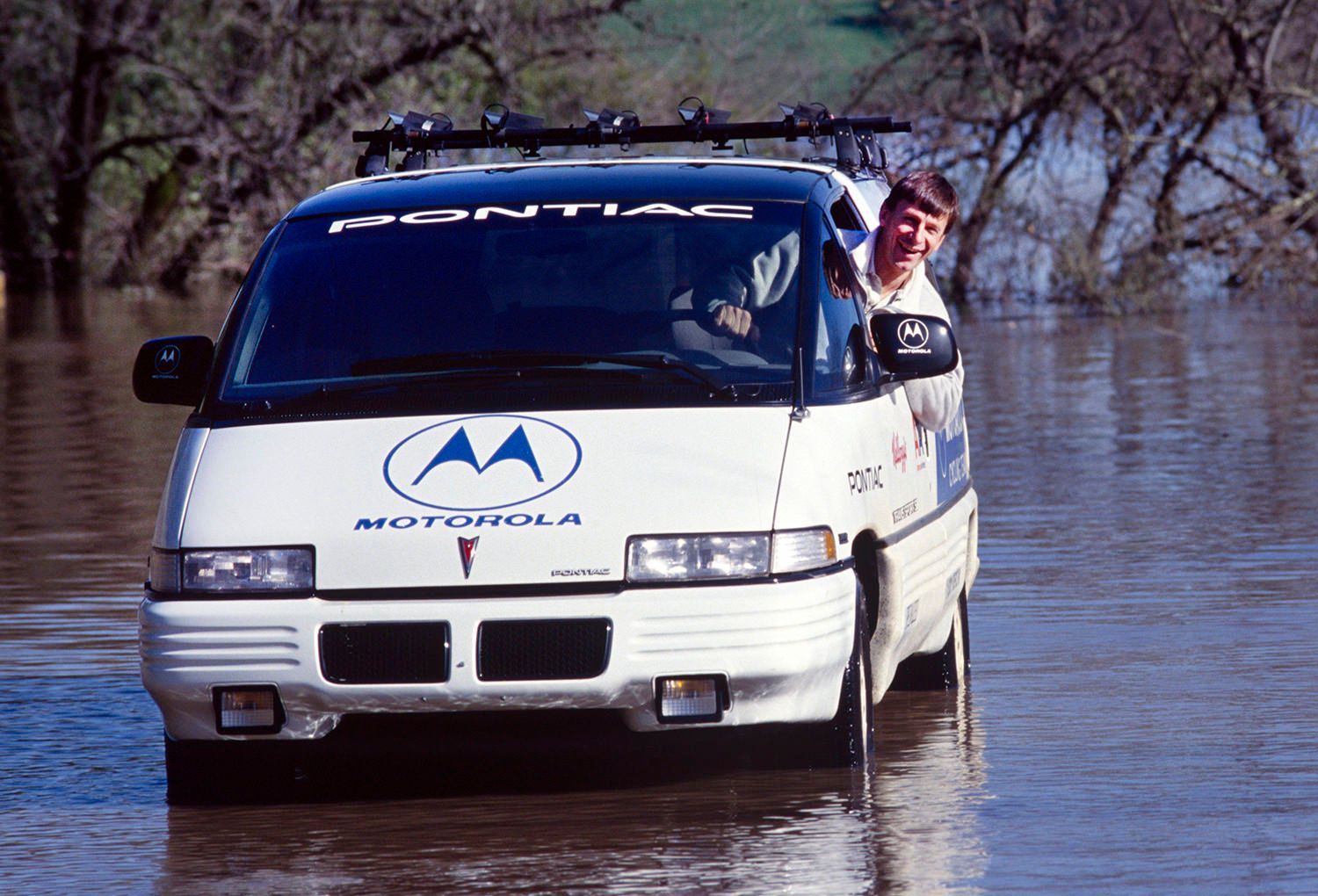
"I'll remember Paul for many things - as a pioneering professional cyclist, a TV commentator, a hors-category PR officer and general laugh-a-minute entertainer. But most of all I'll remember him as a friend of almost forty years. When I first ventured to continental Europe with my cameras in the late-1970's, Paul was the one cyclist who took an interest in what I was doing. Without realising it at the time, both of us were running parallel adventures in the world of cycling, Paul as a determined young bike-rider, me as an ambitious yet dreamy photographer. I noticed how Paul had set up his shop by living with the French, embedding himself in the very French world of cycling, and building deeper foundations than if he had just hung out with his fellow British colleagues. I too saw the importance of mixing in with the French photographers, so too the Belgians, Dutch, Spanish and even Italians, as I made my way into the business. Paul was my go-to cyclist if I needed advice on an up-coming race, or simply someone to ask about the myriad of tactics out there. Or someone to crack a joke with just before the race began. I realised much later in life that we were, in many ways, kindred spirits back then, just that neither of us knew it. A whole grupetto of English-speaking riders followed Paul into the professional ranks in the early-1980’s, and he became their beacon, their talisman, as the European-based hardmen struggled to adapt to this ‘foreign’ influx. It helped the cause that most of the mercurial Scandinavians had joined forces with the Anglophones to smooth their way in. And as each and every one of them took their first steps, there was I, meeting them and photographing them as a friend of Paul Sherwen. I soon realised that Paul was a leader amongst this band of brothers in the sport. No matter if he was engaging with a fellow-Anglophone or a French superstar like Bernard Hinault, Paul could swing things when it mattered the most. Just as Paul had benefitted from the wisened knowledge of Britain’s Barry Hoban, already a seasoned veteran when Paul turned ‘pro in 1978, so did he take just about every young dude under his wing and point him in the right direction. There were two key elements to Paul’s status. For one, as a loyal team worker he was no threat to anyone in a competitive way, and therefore his advice was utterly selfless – and he led by example on the bike. Secondly, Paul commanded so much respect from teammates and colleagues that there was no-one better to turn to.
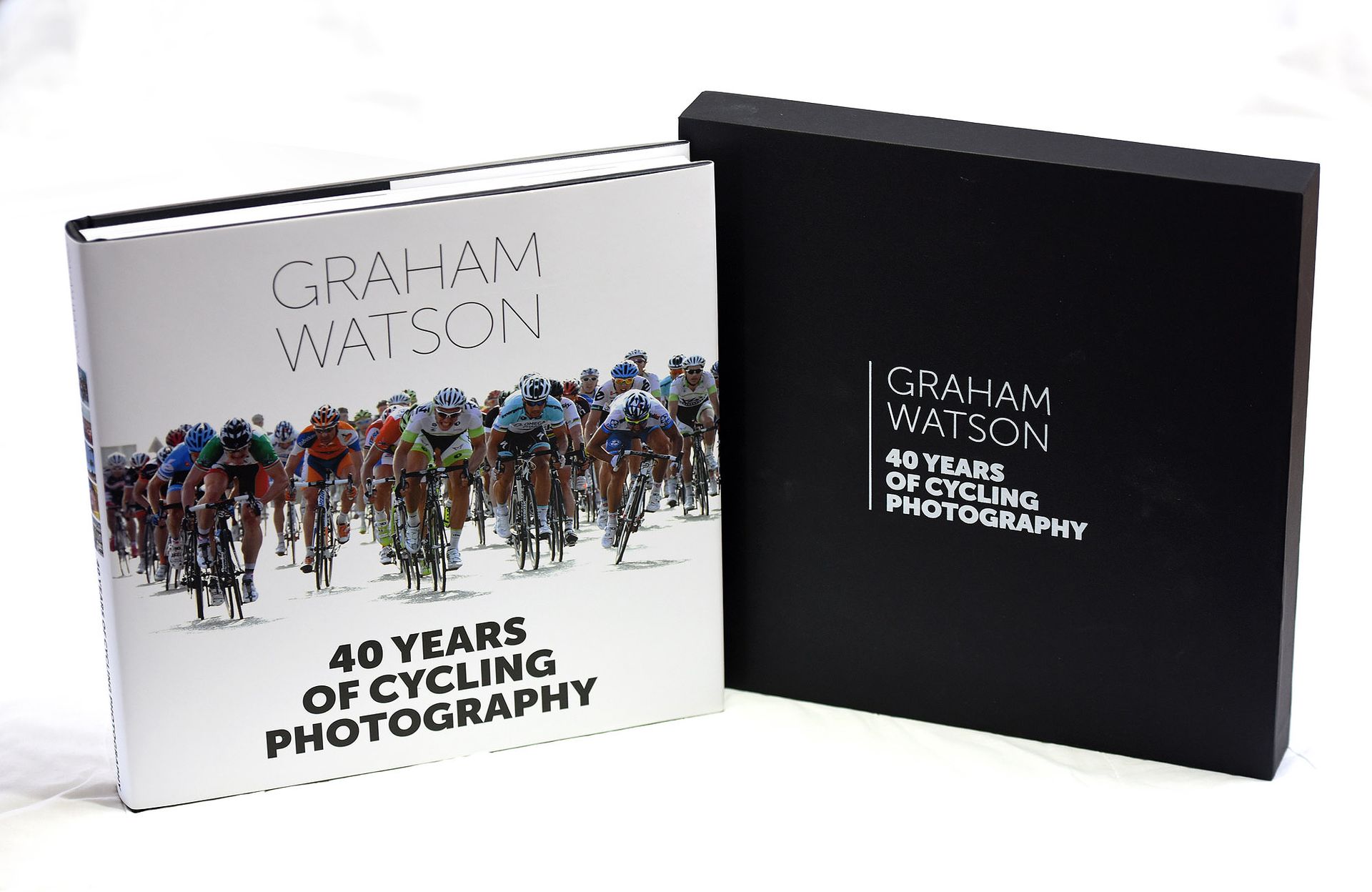
So, what have I been doing for the last year, since retiring as a globe-trotting cycling photographer and settling down to a quieter life? The answer, aside from the obvious ones of relaxation, reflection and lots of bike-riding is producing a book. In fact, producing a massive book, an 11 x 11-inch, 228-page, 330 image edition that reflects my forty years' long career. Creating the title was the easiest part of the book - 40 Years of Cycling Photography speaks for itself. The rest was not so easy, but was very pleasantly time consuming. Images had to be sourced, names and dates put to races and faces - and cross-referenced to make sure they hadn't been seen in any other recent books. Then the writing began, about 1,500 words per chapter to form some order to the book. Finally, and perhaps the hardest part, was working with the designer to ensure that only the very best imagery was in evidence after a series of editing sessions had whittled down the number of images we could squeeze in. The 330 images actually featured would have been cut from an original selection of several thousand, and only after several culls had been made. Oh yes, and then came the photo-captioning, hours and hours' worth, lovingly written and intended to offer full disclosure about why the shots were taken and why they were included in the book. I gleaned an awful lot of satisfaction as I wound my way through everything I'd seen and recorded with my cameras since 1977 - the year I first set eyes on the Tour de France, and where I captured an image of Eddy Merckx that sent me on my way to having the greatest job in the world. So many forgotten images triggered so many long-lost memories, and helped me to collate some amazing stories for the book, both through long dialogue, short tales and those lovingly-written captions. The result is a volume of work that accurately represents what I once did and loved so much, and that I now want to share with everyone. There have been previous titles by me, led primarily by 'Visions of Cycling' which was published in 1988 and showcased the world of cycling photography for the first time. '20 Years of Cycling' was published in 2000 and could be said to be the little brother of this newest book. Yet 40 Years of Cycling Photography is a far deeper, richer, volume of work that covers twice the history of its sibling and a whole lot more in terms of content. This being a self-published project, so with no budget-watching publisher to wrestle with, I have been utterly reckless in ensuring the content covers far more ground than any previous book did. Cyclo-cross, track, road-racing, big races, small races, crashes, fun & games, Hour records, Olympic races - you name it, this book has it amongst its many pages, all under one roof, so to speak. But I won't spoil the fun of you actually seeing the book for yourselves by saying much more about the content.
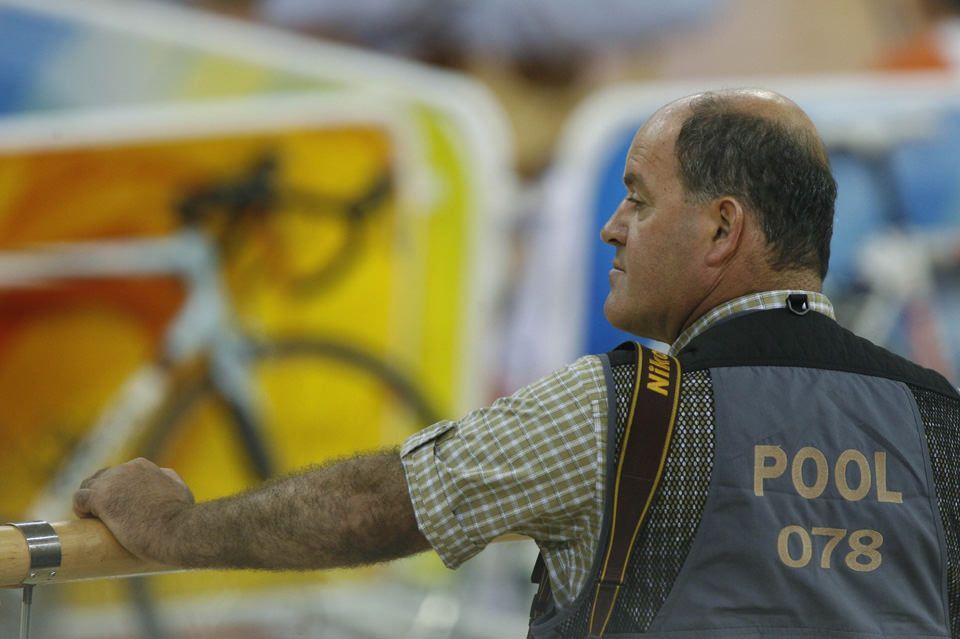
I am no longer a cycling photographer. If you want, you can now refer to me as a ex-cycling photographer or as a former cycling photographer. Yes, after almost 45 years as a professional photographer and 38 years of that as a cycling photographer I am retiring – my last race was the Tour Down Under in January. I turned 60 years-of-age last March and began finalising a plan that had been fermenting in my mind since five years earlier. I had always wanted to stop at 60, reasoning that my vision and reflexes would be left intact if I stopped now – stay too long and the quality and commitment were bound to fall at some stage. By stopping at 60 I also have the chance to discover other things in life, or at the very least get out on my bike more and maybe climb a few of the mountains I’ve photographed for so long. I have reasoned with myself that retirement is the biggest milestone a human being reaches, beyond getting married or buying one’s first home. So this was not a casual, easy decision to make nor carry out. Yet here I am, one day into retirement, sitting on our deck overlooking the Tasman Bay in Nelson, New Zealand, a glass of locally-produced Sauvignon Blanc in my hand, totally at peace with my new lifestyle. That peace would not have been realised had I not enjoyed such a satisfying and rewarding career. From the moment I grabbed a lucky shot of Eddy Merckx on the Champs Elysees in 1977 – a shot that started my career after I won a small prize in a photo-competition at what is now ‘Cycling Weekly’ – to capturing the attacking moment when Richie Porte won the Tour Down Under on Willunga Hill last month, my career has been one long, unbroken, enjoyable, unforgettable, exciting, roller-coaster, highly successful adventure. You name the names; I’ve followed their whole careers. Think of Bernard Hinault, Laurent Fignon, Greg Lemond, Stephen Roche, Eric Vanderaerden, Pedro Delgado, Robert Millar, Sean Kelly, Phil Anderson, Andy Hampsten, Mario Cipollini, Miguel Indurain, Tony Rominger, Bjarne Riis, Laurent jalabert, Jan Ullrich, Chris Boardman, Erik Zabel, Marco Pantani, Stuart O’Grady, Johan Museeuw, Lance Armstrong, Paolo Bettini, Robbie McEwen, David Millar, Tom Boonen, Fabian Cancellara, Cadel Evans, Philippe Gilbert, Mark Cavendish, Alberto Contador, Bradley Wiggins, Alejandro Valverde, Vincenzo Nibali and Chris Froome – that’s a hefty lineage of champions I’ve photographed from amongst thousands of mere mortals. Who is my favourite road cyclist, people often ask? I tell them Sean Kelly, a constant source of great photography when I was a young lad starting out. I then say Indurain came close, ahead of Fignon, Ullrich, Armstrong, Delgado and Wiggins. I also tell them that if I was just 21-years-of-age today, then Wiggins would be my favourite cyclist – the most enigmatic of them all, but as a five-times Olympic Gold medallist, multi World Champion, winner of a Tour de France and current holder of the Hour Record, he is by far the most talented cyclist I’ve ever photographed. My favourite track cyclist? Wow, who to choose from when I’ve seen greats like Danny Clark, Connie Paraskevin, Tony Doyle, Erika Salumae, Koichi Nakano, Lutz Hesslich, Sergei Kopylov, Urs Freuler, Michael Hubner, HH Oersted, ‘Eki’ Ekimov, Jens Feidler, Bruno Risi, Shane Kelly, Jens Lehmann, Florian Rousseau, Felicia Ballanger, Marty Nothstein, Arnaud Tournant, Chris Hoy, Victoria Pendleton, Anna Meares, Laura Trott and Jason Kenny. I’m no misogynist, and have envied the power and grace of the greatest women as well. Connie Carpenter, Jeannie Longo, Leontien Van Moorsel, Nicole Cooke, Lizzie Armitstead and – without doubt the greatest of them all – Marianne Vos are the true luminaries who’ve lit up that part of my career. For the photographers out there, I started with a Pentax Spotmatic II in 1977, but then lived within the Nikon family for almost my entire career. An FE2 in 1978 started me on a 35-year spell with Nikon cameras and lenses, save for a moment of desperation that took me to using a Canon EOS 1 between 1996-1998. I’ve used each of Nikon’s flagship film cameras - the FM2, F2, F3, F4, F5 – before partially joining the digital revolution in 2001. The D1, D2, D2H, D3, D4, D4s, and now the D5 have been the camera loves of my life, they’ll never be forgotten! Somewhere along the way I crossed to the dark side of photography, switching from manual focus to auto-focus with more than a small dose of guilt. But by then I’d captured on-film my favourite all-time image - of Hinault and Lemond on Alpe d’Huez - photographed with a totally manual Bronica ETRs. To close out this chronology of technology, I can boast that I started out printing from glass negatives in a London studio in 1972 after photographing aristocracy with a wooden Kodak Specialist camera. I learnt to use a 35mm SLR camera for that 1977 Tour visit and shot black & white film until decent colour slide film came along in the mid-1980’s. I used to take a mobile film lab to the races in the mid-90’s to develop those slides and then scanned them in before e-mailing them to clients as the digital age slowly took off. I switched to an all-digital platform in the middle of the 2003 Tour, having run both forms of photography for a few years. Processing film and scanning-in slides was replaced by late-night editing of 500 images a day, a task that often jeopardised the chance of finding a good restaurant still open. To round off my ancient-to-modern career, and to guarantee an earlier meal, I have for the past two years been transmitting images directly from the camera – a far quicker, more satisfying, healthier way to work. In some ways it’s a shame I’m stopping, just as things were getting easier! Now, the big question – will I miss this fantastic, crazy, wonderful sport and its unique lifestyle? Yes, for sure, though I’ve yet to know which parts I’ll miss the most. I will miss the races, but not all of them – too many events clash or cross over, and it’s impossible to enjoy everything with so much to take in. I’ll miss the true classics, like Omloop, Strade Bianche, E3, Wevelgem, Flanders, Roubaix, Liege and Lombardy. But I’ll miss the stage-races the most, especially Paris-Nice, the Giro, Vuelta, Romandie, and Suisse. I won’t miss the Tour as much as people might think– it’s become a claustrophobic colossus that is not always as enjoyable as I’d like, even though it dwarfs all other grand tours. More than the races, I think I’ll miss the fun of travel-planning, of the subsequent adventures, the chase of a good meal and good wine, the intimacy of an evening spent with your car and motor-bike drivers, or the camaraderie with colleagues when the rain is pouring down during a TT and we’ve all left our Gore-Tex, camera-condoms, and umbrellas behind. I know I’ll especially miss the excuse of buying the latest photographic gear, simply because I could buy it. Much more than this, I’ll miss watching my boys racing their hearts out. If I’ve followed some of the greatest champions through their entire careers, I’m signing off without seeing how good Esteban Chaves, Caleb Ewan or Fabio Aru might become – or which of the Yates brothers makes it to the very top, if they don’t both make it there. Is Dan McLay the next Cavendish, will Boonen win a fourth Flanders or a fifth Roubaix this spring? Can Ian Stannard spoil Boonen’s dream in Roubaix? I’d better go out and buy a decent TV… I cannot sign off for good without acknowledging the help of so many people who made my career last so long, and to some who helped make it possible in the first place. Journalists are a necessary ‘evil’, I like to jest – but they help smooth the photographer’s path into magazines, newspapers, web-sites and even into sponsors’ deep pockets. Top of the list has to be John Wilcockson, a doyenne of English-language journalism who guided me through my early years at Cyclist Monthly, Winning, Inside Cycling and Velo News. He even inspired me to write articles and blogs in my later years, so thanks mate! Rupert Guinness came along in the days of Winning, and we were still sharing yarns and drinking wines last week in Adelaide, 30 years on. In 2013 he became the best best-man I could ever have had! William Fotheringham became the new Wilcockson when he joined Cycling Weekly in 1989-1990 – his ability to write at-length and with such wisdom has never waned to this day. With Russian-speaking Will I visited Moscow for a 6-Day race and navigated its metro system with solely Cyrillic signage – I then survived Moscow’s dire communist-age gastronomy as well. I’ve brushed shoulders with so many Dutch, Belgian, Spanish, Italian, French, German, Japanese, Australian and American journalists too – each and every one of them led me to being published in all those different languages, either in magazines, newspapers or books. Yet, journalists aren’t exactly famous for spending money unnecessarily. Instead it is the publishers who have done that. I’ve been fortunate to have worked with the very best cycling publications in the world, including Cycling Weekly, Cycle Sport, Winning, Velo News, Bicycling, RIDE Review, Ciclismo a Fondo, Pro Cycling, Favoriet, Wieler Revue, Tour – to name just the biggest and the best. Thanks to the exploits of Lemond and Armstrong, my work has been seen in Sports Illustrated, Vanity Fair, and a handful of consumer related publications on both sides of the Atlantic. Some publishers have stayed with me for almost forty years, some for just 30 years, and some for a bit less – collectively, they formed a strong foundation on which I could do business and prosper. I thank them one and all. Race-organisers have been many and multi-national, and some of them welcomed this oddball British photographer into their exclusive European world almost four decades ago – especially Jean-Marie Leblanc who let me into the 1987 Tour on a moto and opened an Aladdin’s cave of opportunity. In 1998, I became the UCI’s first-ever photographer, a not insignificant role that I only gave up last week, and with much regret, for they really are a nice bunch of people. Thanks must go to my many colourful moto-drivers who’ve kept me safe and sound and close enough to the cyclists to make my job easier. I’ve been driven by a Flemish abattoir owner, a Spanish hairdresser, an Italian customs officer, a French taxi-driver, an Australian police detective, a Basque donkey-breeder, a genuine California Highway Patrol officer (CHIPs!) and a whole host of others too. My current drivers, Walter Conte, Luke Evans and Serge Seynaeve deserve the biggest praise as it cannot be easy piloting a 60-year-old with nerves of steel who also thinks he knows it all. But none of this would have been possible had so many cyclists not done what they did and made my job that much more pleasurable and memorable. You’ll all be sorely missed. - Graham Watson
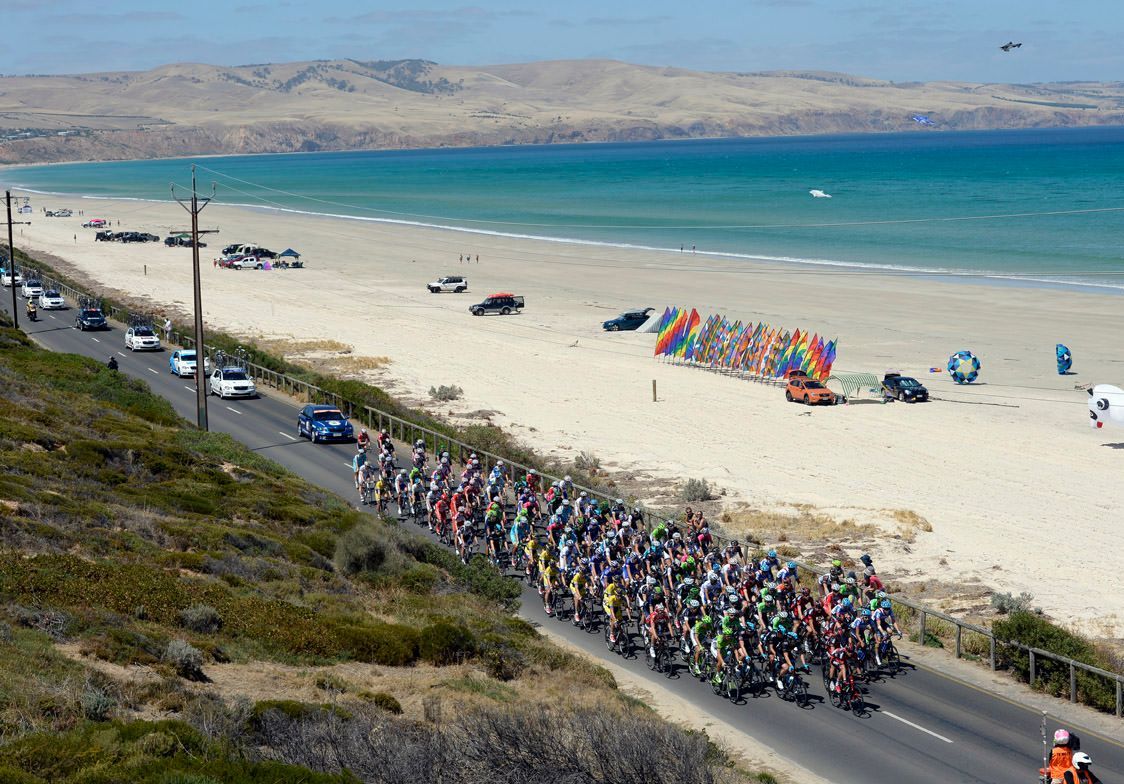
The 2010 road season ended in Como last weekend, exactly nine months after it began in Adelaide with the Tour Down Under. The season ending coincided so perfectly with the announcement of the 2011 Tour de France route that will act as a conduit to the next season while we wait for the fun and games to begin again. Has it been a great season? I think so; 2010 has been a season of diversity with no one champion winning everything, but instead a lot of top riders producing their very best on given days. The races have been as exciting as ever, partly because no one cyclist has had the chance to impose himself day in, day out. Of course, we've had to deal with unsavoury things like Valverde's suspension and maybe an impending one for Contador – but, heck, cycling wouldn't be cycling without these setbacks, now would it?! The highlights of my 2010 are quite clear and easily recalled in word and image. First off comes the Tour of Oman, a new race in February on the Arabian peninsula that became an instant hit because of its stunning scenery and welcoming hosts. It's not officially on the 2011 calendar because of some administrative error, but it will take place for sure, and be sure I'll be going back there again; what a shame it can't be a mid-season event and have a bigger peloton too! Kuurne-Brussels-Kuurne was probably the greatest one-day race of the season, coming as it did on the last weekend of February and run off in the most difficult conditions: rain, crashes, gales and cold combined to make this a major test for one and all, I won't forget that day for a long time to come! Paris-Nice was as brutal in terms of weather, but resulted in a well-earned win for Contador after some mighty battles against fellow Spaniards Valverde and Luis Sanchez. Fabian Cancellara nailed a great Classics double by soloing to victory in both Flanders and Paris-Roubaix. If there was one man who dominated 2010 it was the Swiss rider, who later imposed himself at the Tour, Vuelta and Worlds. The Classics' wins of Cancellara incited scrutiny by the UCI for alleged use of a motorized bicycle and made for some funny post-race checks with an airport x-ray machine until the UCI realized they'd been a victim of their own paranoia! The machines disappeared after the Tour de France, especially after Cancelllara had won the penultimate day TT at over 50-kms-per hour, without a motorised toy. World Champion Cadel Evans won Fleche Wallonne on a new, tougher, course and his gutsy victory was imitated a few days later when Alexandre Vinokourov won Liege after a long breakaway with fellow toughie, Alexandre Kolobnev. The Tour de Romandie introduced the world to Australia's Richie Porte, who won the race's main TT and attracted a protest by rival team managers who just could not believe Porte had ridden that fast for so long! Romandie went to that unwanted pest Valverde, after a last-stage battle with Michael Rogers, who would go on to win the Tour of California in May. The Giro d'Italia was not just the best stage-race of the season – I rate it as the best stage-race of my entire career! From day one in The Netherlands to the last-day TT into Verona, the Giro was a roller-coaster of a ride for anyone racing in it or simply following it. Winds, atrocious weather, courageous racing and so-scary a mountainous route conspired to set this Giro as the benchmark for all other three-week races to refer to. Ivan Basso won after a mighty battle with Evans on the Zoncolan, but the sport of cycling won even more, thanks to the audacity of the Giro organisers. We're just a week away from hearing of the 2011 Giro route – can it get any better, I ask? I'll never forget the stage to Montalcino, on those famous white roads, when Evans and Vinokourov went head-to-head, when Basso and Nibali lost two minutes, and when Sky's Bradley Wiggins pedalled headlong into a proverbial wall of fatigue, pain and desolation. Many people point at the Tour de France of Wiggins as his nightmare ride. But the writing was on the wall in Tuscany, for Team Sky would never be the same again in 2010. Jani Brajkovic won the Dauphiné-Libéré for Radio Shack, to put a new face on the list of the season's winners. The Slovenian smoothie beat none other than Contador, who even then was displaying signs that he was not in the same form as 2009. The Dauphine established a new star in Tejay VanGarderen - the young American took 3rd-overall in his first major stage race in Europe! The Dauphiné was under new ownership at ASO, and couldn't have wanted for a better race, route, and outcome, one month short of the Tour starting. The Tour de Suisse was a week of atrocity in conditions equal to anything the Giro had – and maybe even worse, given that it was held in the middle of June! Lance Armstrong had his final Tour warm-up in Switzerland, and contributed both his athleticism and stardom to an otherwise mediocre event on a course once again designed for Cancellara. But the overall winner was Frank Schleck, who produced an amazing last-day TT to hold off an Armstrong on the brink of a morale-boosting win after crashing out of the Tour of California a month earlier. The 2010 Tour de France will be remembered for the contentious way in which Contador took the yellow jersey after apparently attacking Andy Schleck who'd unshipped his chain in the Pyrenees. This Tour will not be remembered for much else, certainly not the lack of animosity that emerged after such a delicate moment, and certainly not for the way in which Contador won. It was as if Schleck and Contador had made a quiet peace after that stage into Luchon, that Schleck could win the queen stage to the Tourmalet while Contador would take the final honours. We'll never know if Schleck could have won the Tour, for he never really tried on the Tourmalet, perhaps believing his woeful time trialling would hand the race to Contador anyway. In fact Schleck scared Contador on that Pauillac TT, and his losing margin overall was exactly his loss on the mountain above Luchon – 49-seconds! What might have been had Schleck attacked? I prefer to remember this Tour for the sprinting comeback of Mark Cavendish, for whom all seemed lost after the five opening stages – the Manxman's five stage-wins ignited the Tour between mountain stages – and for the brutal racing on stages two and three that ruined Armstrong's chances of winning an eighth Tour. Given the quietness of the months of August and September, it is just as well the Vuelta a Espana was the blockbuster of a race it became – the season needed it after such an unsatisfactory Tour. Like the Giro many months earlier, the Vuelta rarely had a dull day, not even in the heat-seared stages of the south when you could have cooked fried eggs on the roads the race used. This was a Vuelta missing Valverde, Contador and Sammy Sanchez – Spain's most popular cyclists – and missing Andy Schlck and Robert Gesink as well. But any thoughts of mediocrity in the racing went out of the window right away. A series of nasty uphill finishes stirred the G.C from day three onwards, while sprinters like Farrar, Cavendish, Petacchi, Hushovd and Hutarovich entertained us on the days between climbing skirmishes. I cannot remember a Vuelta that was so pretty, that found new routes in familiar regions, and that maintained its beauty and drama right to the end. Like the Giro, its Spanish sister used audacious choices to keep everyone on their toes until the very end, or at least until the risky use of the sheer ascent of the Bola del Mundo, above the ski-resort of Nevaccerada. As it should be, the strongest cyclist won – Vincenzo Nibali – but Spain took a victory in the performances of Joachin Rodriguez who, unlike Nibali, actually won stages! The rest of 2010 we know already. A stupendous World Championships in Geelong led to a so-so Paris-Tours and a wet, cold, and highly challenging Giro di Lombardia, won in spectacular fashion by Philippe Gilbert. What more can we want from such a long season? 2010 had just about everything for the cycling fan. Only the Tour disappoints, a situation not helped by the dilemma facing Contador, until now such a squeaky-clean rider. His situation compounds what has been a highly complicated transfer market since July, with the Schleck brothers and many of their mates leaving Saxo Bank, and Contador joining that team in their place. One wonders what Bjarne Riis will do without Contador, if the worse case scenario emerges. Well, the crafty Dane is a survivor and will find alternative talent if Contador gets banned. Whatever, 2011 will arrive sooner than we realise, and with quite a number of visual changes. No Milram, no BBox, but a brace of new teams or sponsors coming in, with all the excitement and speculation it creates. Things evolve all the time in cycling, but I think we are on the verge of an exciting new era. The 'old guard' as we know it is changing, both in terms of riders and team managers. Roll on 2011 – it's just a few months away already! - Graham Watson
